The Coulter Principle utilizes an electric field to sense particles drawn by fluid flow through an aperture of defined size and measures the electric pulses generated. The pulses are then converted for size distribution and concentration measurements of particle suspended solutions. The Coulter Principle is the basis for any Coulter Counter instrument and is widely used in fields such as hematology where cell counts are important.


Typical Experimental Results

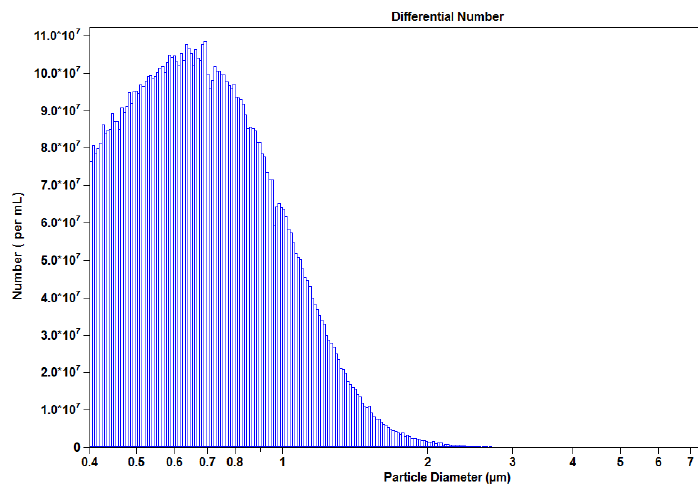
Particle concentration as a function of particle diameter measured with the Multisizer 4

Particle concentration as a function of particle diameter


Applications

AbrasivesAir ContaminationBacteria
BeveragesBiomedical IndustryBiotechnology
Cell BiologyCeramicsChemical-Mechanical Polishing
Chromatographic MaterialClaysConstruction Industry
CosmeticsElectronic IndustryEmulsion
EnvironmentalFiltration & Filter EfficiencyFood Industry
FuelHydraulic FluidsMarine Biology
MetalsMicrospheresPaints & Pigments
Paper IndustryPesticidesPetrochemical Industry
PharmaceuticalsPhoto IndustryPowder Metallurgy
TonersVaccinesWater Contamination

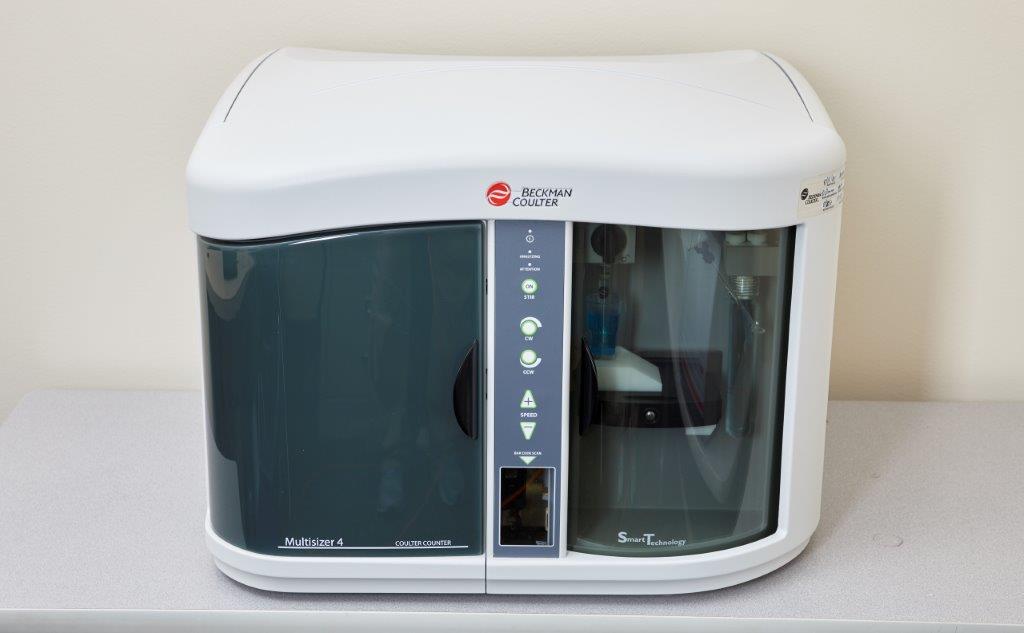
Instrument: Beckman Coulter Multisizer 4

Beckman Coulter Multisizer 4 in laboratory
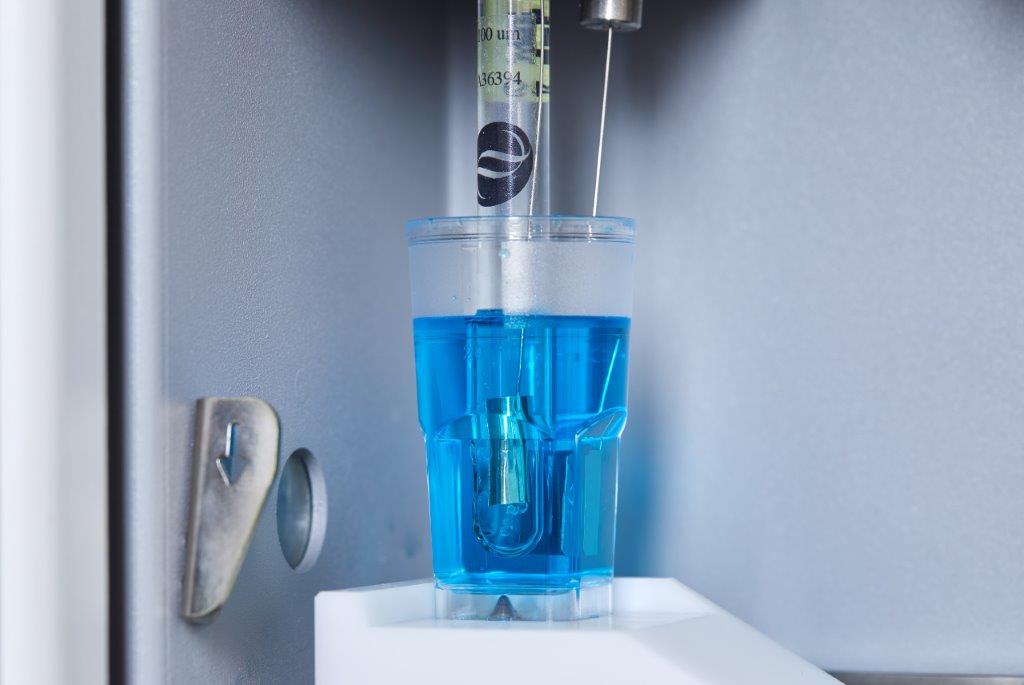
Aperture tube used in Coulter counting measurements

Instrument Key Specifications

Particle Sizing Range0.2 to 1600 μm diameter
Size Accuracy±0.4% of aperture size
Number of Size ChannelsUp to 400


Concentration and Size of Particles in a Diamond Polishing Slurry

The manufacture of polishing slurry requires reliable information on the particles’ size, size distribution and concentration for desired polishing results. On the industrial scale, such information has been traditionally obtained via sieving for particles larger than 70 μm and sedimentation for particles smaller than 60 μm. However, when higher accuracy is needed, especially when particle concentration in slurry becomes necessary, more advanced techniques such as the particle characterization technique based on the so-called Coulter Principle is required.

The Coulter Principle is a method that uses an electric field to count and size particles dispersed in a conducting liquid. When a particle passes through a small orifice, the electrical conductance across the aperture changes relative to the amount of volume displaced by the particle. This results in measurable electrical pulses which can be used to determine the size of the particles in a suspension. Unlike laser diffraction methods, the Coulter Principle yields exact particle counts which can be used to determine the sizes and their concentrations of the particles in a slurry.

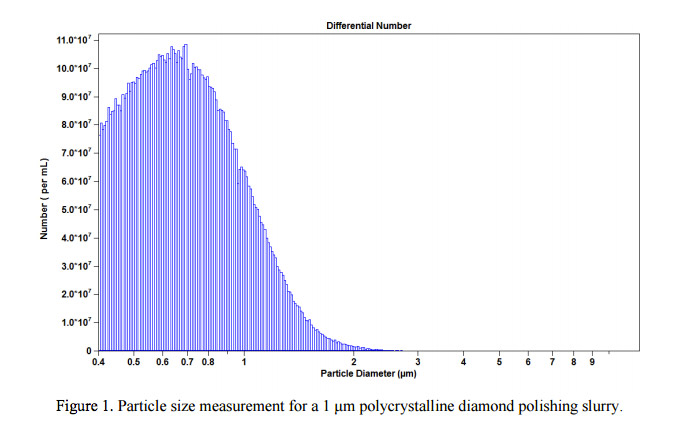
Particle concentration as a function of particle diameter measured with the Multisizer 4

A high quality test instrument based on the Coulter Principle, such as the Multisizer 4 Coulter Counter equipped in Ebatco’s Nano Analytical Testing Laboratory (NAT Lab), is capable of characterizing a wide range of particle sizes and concentrations. Since particle size measurements are limited based on the size of the measurement orifice, the Multisizer 4 comes equipped with a number of different aperture tubes which allow the instrument to measure particle sizes ranging from 200 nm to 1.6 mm. This broad detection range allows such an instrument to be used for a wide variety of different applications including hematology, paints, ceramics, pharmaceuticals, abrasives, food and beverages, etc.

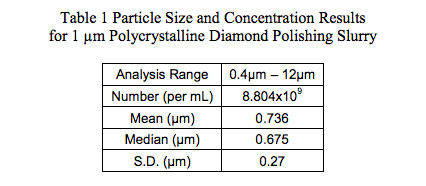
Particle Size and Concentration Results for 1 um diamond slurry

The data presented in Table 1 is for the 1 µm polycrystalline diamond polishing slurry tested using the NAT Lab’s Multisizer 4 Coulter Counter. Figure 1 shows the actual particle number per milliliter at different sizes. By using a known sampling volume, the concentrations of suspended particles at different sizes were successfully measured.


ASTM Standards

ASTMTitleWebsite Link
F2149Standard Test Method for Automated Analyses of Cells- the Electrical Sensing Zone Method of Enumerating and Sizing Single Cell SuspensionsLink
C690Standard Test Method for Particle Size Distribution of Alumina or Quartz Powders by Electrical Sensing Zone TechniqueLink

ISO Standards

ISOTitleWebsite Link
13319Determination of particle size distribution– Electrical sensing zone methodLink