The stability of particles in solution can be quantified by measuring the Zeta potential of the particles. Zeta potential is the measurement of the electric potential at the slipping plane in the double layer surrounding a particle in liquid suspension. While not measured directly, Zeta potential can be calculated using theoretical models and measuring the electrophoretic mobility of the particles. An induced electric field causes charged particles in solution to move toward the electrode opposite their surface charge. The velocity of the charged particles moving toward the electrode is proportional to the amount of charge of the particle. Using Electrophoretic light scattering, the velocity of the particles can be determined by measuring the frequency shift of the light scattered by the particles in motion.


Typical Experimental Results

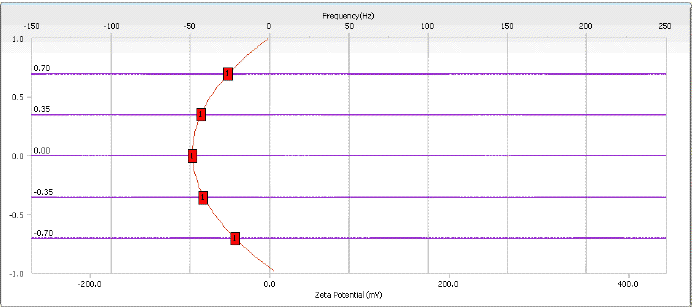
Zeta potential calculated by electrophoretic mobility of the particles

Zeta potential analysis of particles in solution

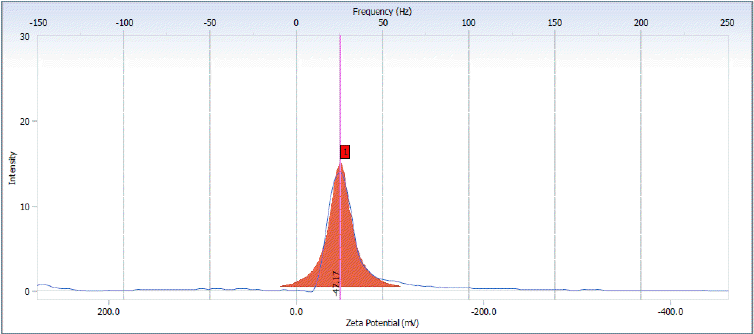
Zeta potential distribution of nanoparticles

Zeta potential distribution graph of nanoparticles in solution

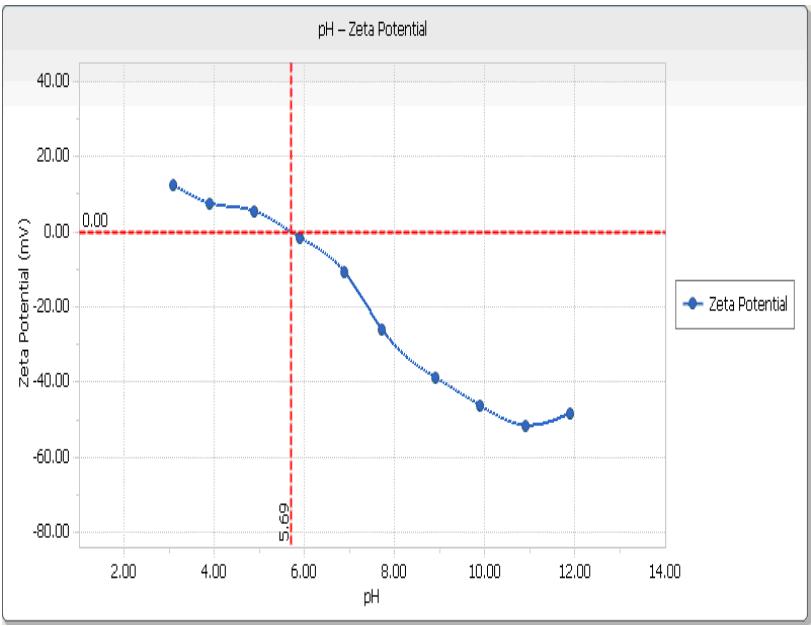
Particle zeta potential as a function of pH level

Zeta potential as a function of pH level


Applications

Effect of AdditivesElectroosmotic FlowElectrophoretic Light Scattering
Isoelectric PointOil SuspensionsOrganic Mixtures
Particle Agglomeration/CoagulationParticle MobilityParticle Suspensions
pH AnalysispH TitrationPolishing Slurries
SedimentationSurface ChargeSuspension Stability and Shelf Life

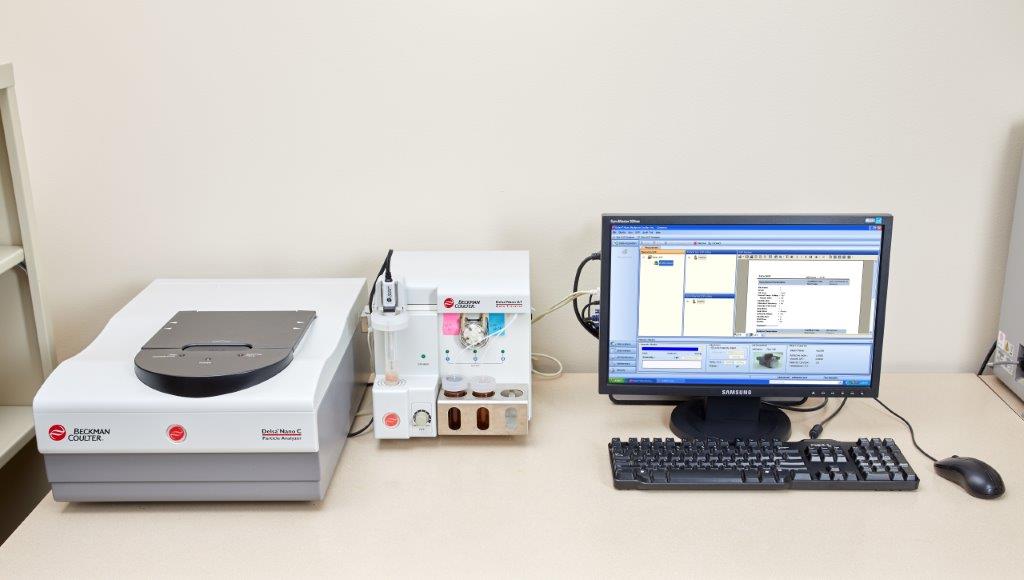
Instrument: Delsa Nano C Nano Particle Size and Zeta Potential Analyzer

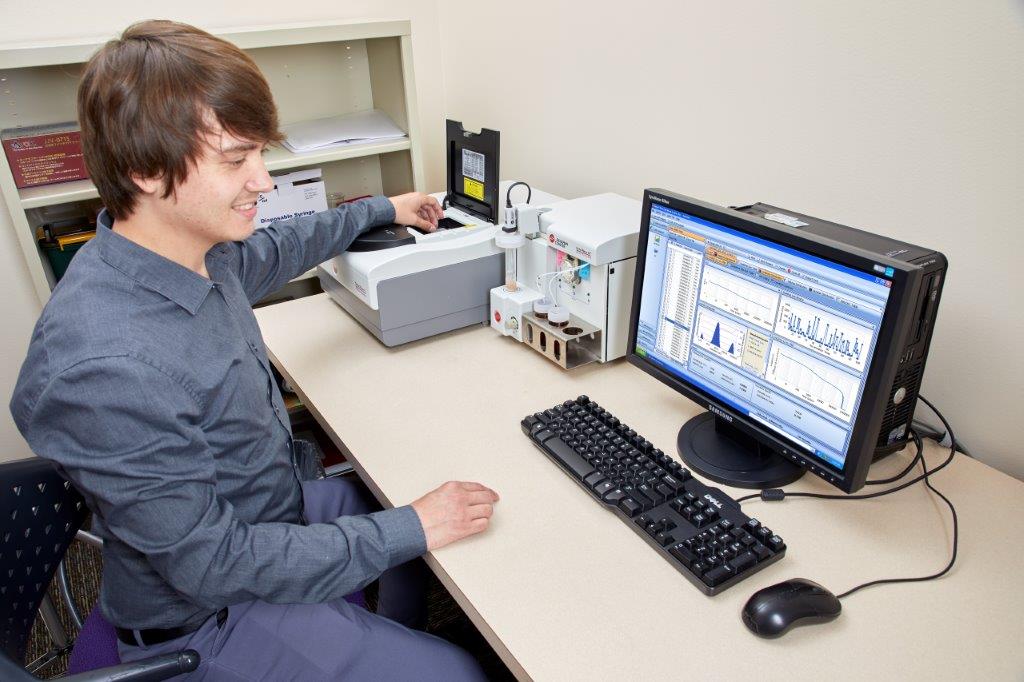
Scientist analyzing particle zeta potential in laboratory
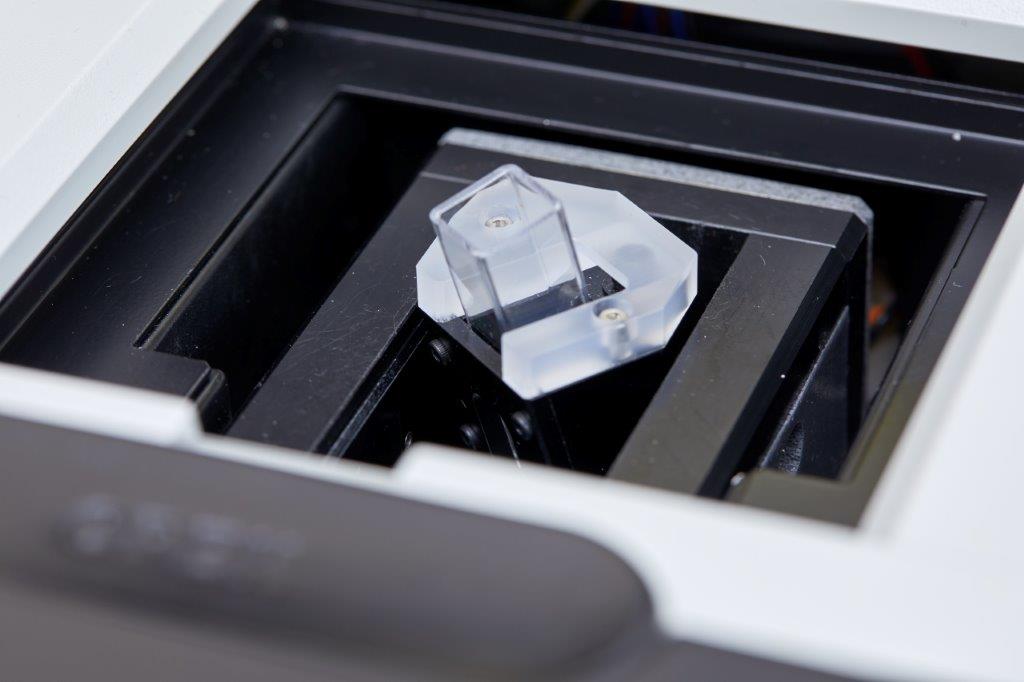
Size cell for particle sizing measurements
Beckman Coulter Delsa Nano C Particle Analyzer in Laboratory

Instrument Key Specifications

Concentration Range0.001%-40%
Max Heating Temp90 degrees C
Max Cooling Temp15 degrees C below ambient temp
pH Range1-13
Zeta Potential Range-100 – +100mV
Scattering Angle15, 30, 160 degrees
Flow Cell Sample Requirements0.7mL
High Concentration Cell Sample Requirements1mL

Zeta Potential


Zeta Potential of Silica Slurry as a Function of pH

In colloidal systems, Zeta potential is the electric potential at the slipping plane in the double layer surrounding a particle suspended in a fluid, in reference to a point in the bulk fluid far away from the particle. In other words, zeta potential is the potential difference between the dispersion medium and the stationary layer of fluid attached to the dispersed particle. The double layer is composed of the stationary Stern layer and the diffuse layer. The Zeta potential, measured in mV at the slipping plane or the interface between the Stern layer and the diffuse layer is widely used as a measure of the particle stability in colloids. The higher the Zeta potentials absolute values are the more stable the particles in the colloids.

Zeta potential is not measurable directly but it can be calculated using theoretical models and an experimentally-determined electrophoretic mobility. When an electric field is applied to charged particles in the colloids, particles move toward an electrode opposite to their surface charge. Since the velocity is proportional to the amount of charge of the particles, zeta potential can be estimated by measuring the velocity of the particles. Electrophoretic light scattering is the method most popularly used to determine the velocity of the particles suspended in a liquid medium under an applied electric field. In order to determine the speed of the particles, the particles are irradiated with a laser light and the scattered light emitted from the particles is detected. Since the frequency of the scattered light is shifted from the incident light in proportion to the speed of the particles movement, the electrophoretic mobility of the particles can be measured from the frequency shift of the scattered light.

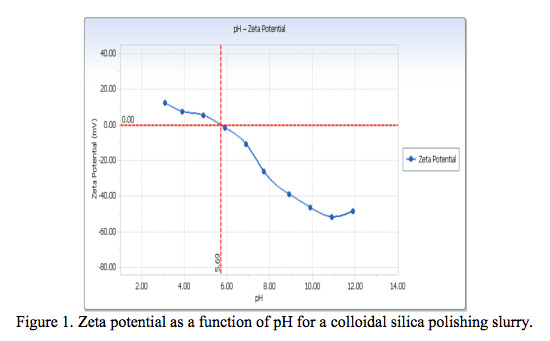
Particles zeta potential as a function of pH for colloidal silica

For polishing slurry, stability is very important. If the Zeta potential is too low, particles will agglomerate and create large clusters. These large clusters can lead to undesired deep scratches in the polishing surface. For applications that require very smooth surfaces, these scratches can be devastating.

By using the DelsaNano C Particle and Zeta Potential Analyzer, Auto Titrator and the Flow Cell, the Zeta Potentials of a colloidal silica polishing slurry were measured as a function of solution pH values. Figure 1 shows the experimental results on the Zeta potentials of this colloidal silica polishing slurry from 3 to 12pH. It is found that a pH level between 10 and 11pH will result in the highest absolute Zeta potential values. The results indicate that the Zeta potential may be controlled by adjusting the pH level of the slurry. The possible explanation for this is that increasing or decreasing the pH level changes the amount of ions available in the slurry, which affects the charge in the double layer.

Colloid and suspension stability is important for not only polishing slurries, but also for paints, pharmaceuticals, food and beverages that have fine particles dispersed in fluids. Zeta potential can be used in these colloidal and suspension systems’ dispersion control, stability and shelf life studies.


ASTM Standards

ASTMTitleWebsite Link
E2865Standard Guide for Measurment of Electrophoretic Mobility and Zeta Potential of Nanosized Biological MaterialsLink
E1470Standard Test Method for Characterization of Proteins by Electrophoretic MobilityLink

ISO Standards

ISOTitleWebsite Link
13099Colloidal systems– Methods for zeta potential determinationLink
15900Determination of particle size distribution– Differential electrical mobility analysis for aerosol particlesLink