By using a specially designed cell, the Zeta potential of a flat surface can be measured through the same process as Zeta potential for particles in solution. While the flat solid surface does not contribute particles for measurement, the surface Zeta potential is measured by adding probe particles to a test solution. As with Zeta potential for particles, flat surface Zeta potential can be calculated from the measured electrophoretic mobility of the probe particles. The characterization of flat surface Zeta potential can lead to a better understanding of how a material such as thin films and coatings behave.


Typical Experimental Results

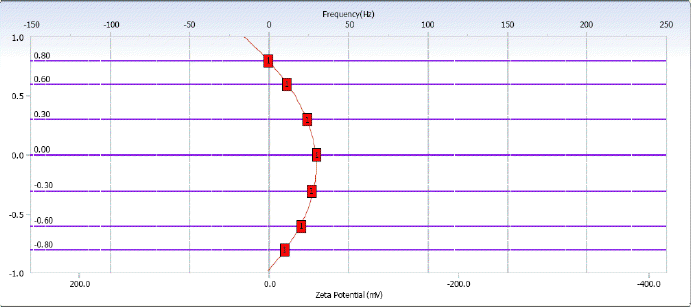
Zeta potential calculated by electro-osmotic flow

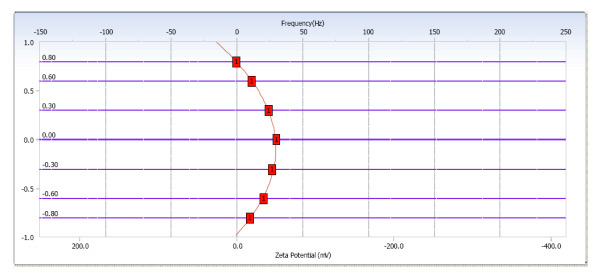
Electro-osmosis plot for a flat solid surface

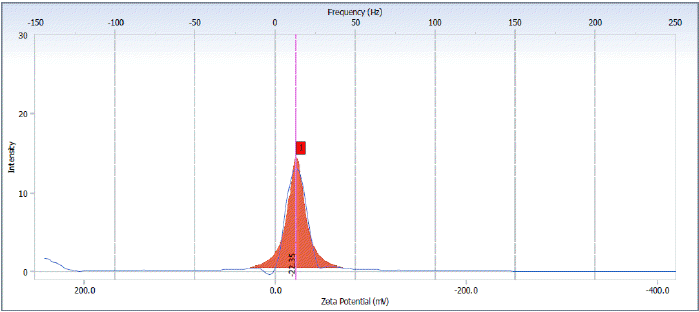
Zeta potential distribution of nanoparticles

Zeta potential distribution graph for a flat solid surface

Zeta Potential of Flat Solid Surfaces

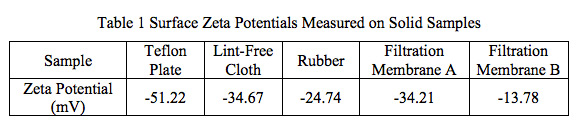
SampleTeflon PlateLint-Free ClothRubberFiltration 
Membrane A
Filtration 
Membrane B
Zeta Potential (mV)-51.22-34.67-24.74-34.21-13.78

Applications

Effect of AdditivesElectroosmotic FlowElectrophoretic Light Scattering
Isoelectric PointParticle MobilitypH Analysis
pH TitrationPhoto Correlation SpectroscopySolid Surface
Stability and Shelf LifeSurface ChargeSurface Coatings
Temperature EffectsThin Film MembranesZeta Potential of Flat Surface

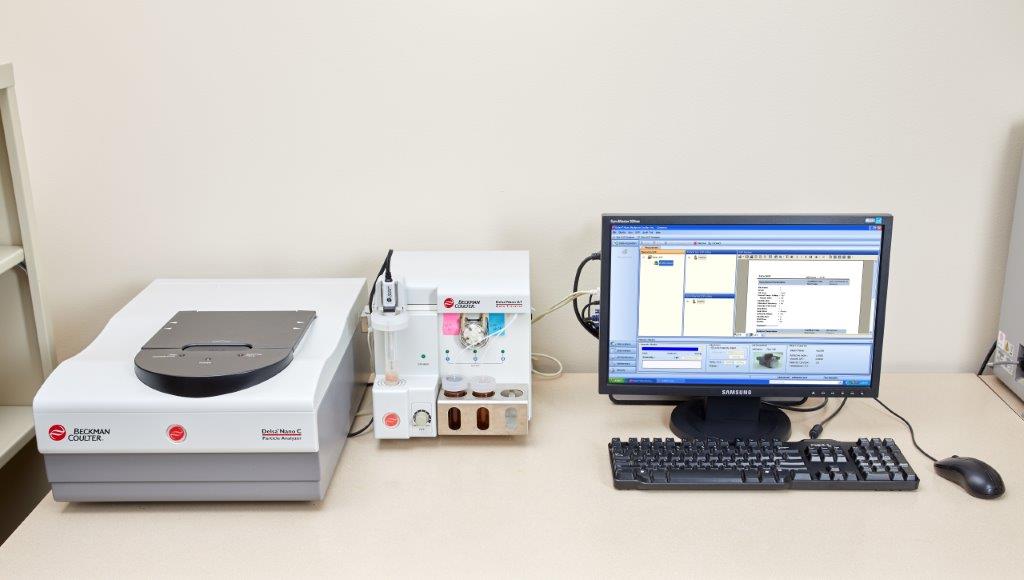
Instrument: Delsa Nano C Nano Particle Size and Zeta Potential Analyzer

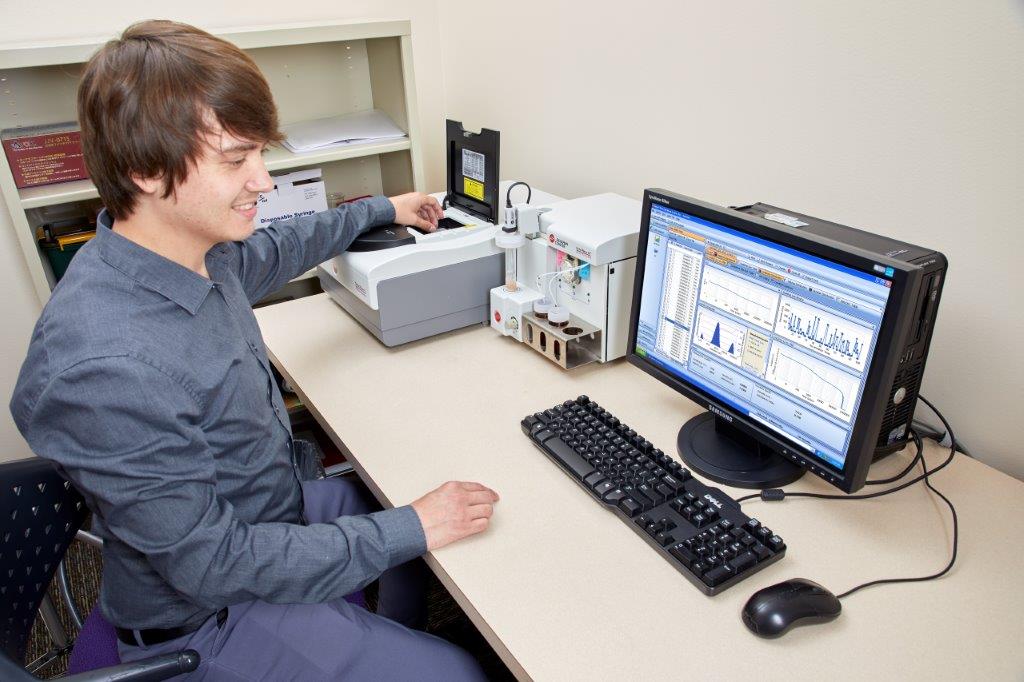
Scientist analyzing particle zeta potential in laboratory
Beckman Coulter Delsa Nano C Particle Analyzer in Laboratory

Instrument Key Specifications

Concentration Range0.001%-40%
Max Heating Temp90 degrees C
Max Cooling Temp15 degrees C below ambient temp
pH Range1-13
Zeta Potential Range-100 – +100mV
Scattering Angle15, 30, 160 degrees
Flat Surface Cell Sample Requirements33x14mm (min), 37x16x5mm (max)


Zeta Potentials of Solid Surfaces

The Delsa Nano C Particle and Zeta Potential Analyzer, supplied by Beckman Coulter, has a unique capability to measure Zeta potentials of solid surfaces, in addition to determining particle size and particle Zeta potential in a solution. The solid surface Zeta potential measurements are performed with a specially designed flat surface cell.

The procedure for measuring the Zeta potential of a solid surface is similar to a typical Zeta potential measurement for particles. The measurements are carried out through dynamic light scattering of charged probe particles under influences from both electroosmosis and electrophoresis. The true electroosmotic flow due to solid surface Zeta potential is obtained by subtracting the true electrophoretic mobility from the total apparent electro-osmotic flow of the charged probe particles.

Zeta potential calculated by electro-osmotic flow

Figure 1. Zeta potentials at different locations in a flat surface cell due to the total apparent electo-osmotic flow of the probe particles, obtained during the measurement of the Zeta potential for a Teflon plate surface.

Surface zeta potential measured on solid samples

The surface Zeta potentials for several solid samples measured using the Delsa Nano C are shown in Table 1. They were derived from the Zeta potential plots, similar to the plot depicted in Figure 1.

Surface Zeta potentials of solids are extremely useful in filtration membranes for gases, oils, clean and waste waters. Particles and solutes in fluids may have negative or positive charges. A membrane with the same or the opposite charges could increase or decrease passing-though or retaining efficiency of the membrane. Measurements of Zeta potentials of solid surfaces also play important roles in biomedical material developments. Understanding of the surface Zeta potential of implants and catheters may be very helpful in controlling the surface interactions with blood cells. Other applications that could be benefited from Zeta potential measurements of solids include microfluidics, semiconductor wafer surfaces, coatings and thin films for hydrophobicity and hydrophilicity modifications, etc.