Protective coatings are designed to protect substrates from corrosion, erosion, oxidation, scratch, and wear. A high performance thin and sometimes an ultra-thin film coating are used to protect or decorate a substrate for economic reasons and for conservation of precious and rare materials. Nanoscratch testing is an important technique for characterization of surface properties of these protective and decorative coatings. Knowing the characteristics of a coating in the aspects of scratch resistance and interfacial adhesion can aid the development of coating material with desired performance, functionality and lifetime.


Typical Experimental Results

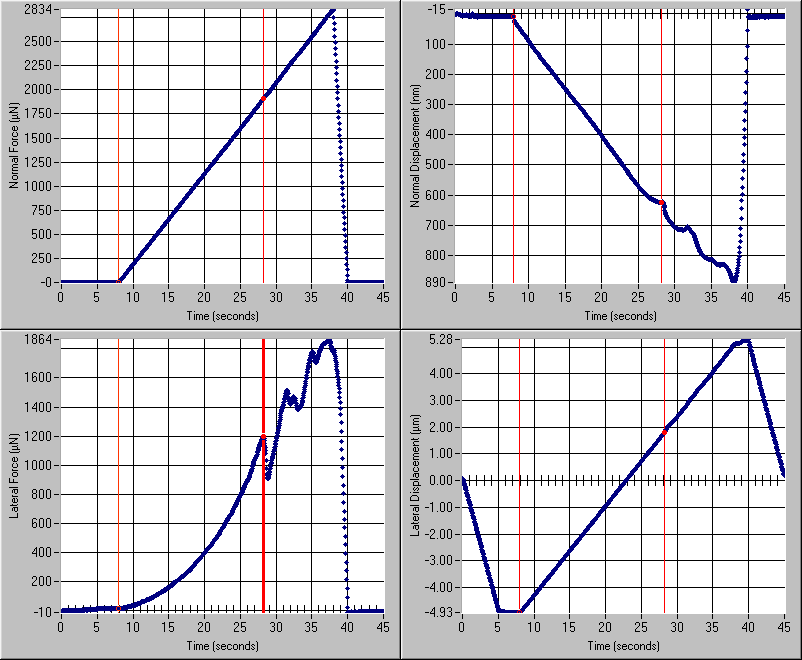
Nanoscratch test data for organic thin film

Figure 1. Nanoscratch test data obtained on an organic thin film on Si substrate specimen.

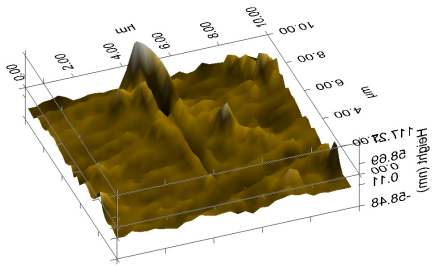
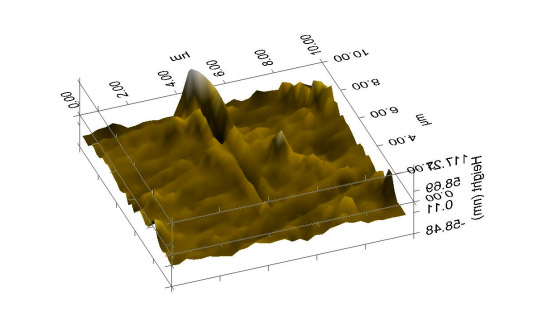
3D plot on polymer film on metal substrate

Figure 2. 3D plot of a nanoscratch conducted on a polymer film on metal substrate for interfacial adhesion evaluation imaged through in-situ SPM imaging.


Applications

Friction Under Extremely Low LoadMEMS Slider FrictionNano/micro Feature Testing
NanolithographyNanoscale Adhesion Nanoscratch
Nanoscratch in LiquidNanoscratch under Environmental ControlNanoscratch Under High/Low Temperature
NanotribologyScratch ResistanceThin Film Breakthrough and Delamination
Thin Film Interfacial AdhesionUltra-Thin Film Testing 

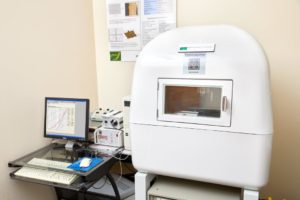
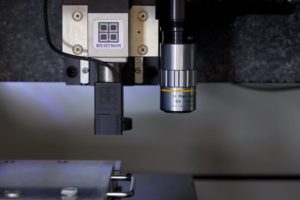
Instrument: Multi-Technique and Full-Feature Nanoindentation System

Multi-Technique and Full-Feature Nanoindentation System in laboratory
Multi-Technique and Full-Feature Nanoindentation System transducer, indenter tip, optics, and sample stage

Instrument Key Specifications

Scratch Distance10 nm
Displacement Resolution0.02 nm
Force Range30 nN to 10 mN
Force Resolution1 nN
Heat Stage Range5 to 300 °C
AtmosphereOpen Air, Inert Gas


Coating Scratch Resistance and Interfacial Adhesion Evaluation through Nanoscratch

Protective coatings are designed to prevent substrate from corrosion, erosion, oxidation, scratch, and wear. A high performance thin and sometimes an ultra-thin film coating are used to protect or decorate a substrate for economical reasons and for conservation of precious and rare materials. Nanoscratch testing is an important technique for characterization of surface properties of these protective and decorative coatings. Knowing the characteristics of a coating in the aspects of scratch resistance and interfacial adhesion can aid the development of coating material with desired performance, functionality and lifetime.

One of the nanoscratch systems equipped in Ebatco’s Nano Analytical and Testing Laboratory (NAT Lab) is capable of carrying out nanoscratch tests under ramp or constant load, pre-selected scratch length and other control parameters. During a nanoscratch, four parameters: normal force, normal displacement, lateral force, and lateral displacement are measured and recorded as a function of time. From these parameters, comprehensive information about a material’s nanoscratch properties can be characterized. Commonly characterized nanoscratch properties include friction between the sample surface and the scratch probe, critical load of interfacial failure, and scratch resistance.

Nanoscratch test data for organic thin film

Figure 1. Nanoscratch test data obtained on an organic thin film on Si substrate specimen

Nanoscratch testing has been widely accepted as a way of evaluating interfacial adhesion of thin film/substrate systems. Failure events may be found where the probe produces delamination, debonding, crack, fracture, or breakthrough at the film/substrate interface. The failure events of the film are normally symbolized by a combination of sudden changes in the lateral force, normal displacement, and/or normal force data. The critical load is defined as the normal force applied to the scratch probe at the time when interfacial failure is detected and can be determined by analyzing the scratch data graphs. The critical load of adhesion failure is a good indication of interfacial adhesion strength. Normally, a higher critical load represents a higher interfacial adhesion. However, the true relationship between interfacial adhesion and critical load is relatively complicated and may be affected by many factors such as the fracture toughness of the materials involved, film thickness, and the scratch testing parameters.

In addition to determination of the critical load at interfacial failure, the nanoscratch tests can be applied to evaluate material’s resistance to scratch such as for clear coat of auto body. It can be used to simulate mar resistance by quantifying the minimum load for generating visible scratches or change of surface gloss or by measuring the scratch width and depth under a selected load.

The friction measurement through nanoscratch is deemed very useful in studying thin film and coating frictional characteristics under extremely lighter load or under very high contact pressure. It is regarded as an invaluable tool for research on friction mechanisms and debris generation under the terminology of nanotribology.

3D plot on polymer film on metal substrate

Figure 2. 3D plot of a nanoscratch conducted on a polymer film on metal substrate for interfacial adhesion evaluation imaged through in-situ SPM imaging.


ASTM Standards

ASTMTitleWebsite Link
D7187Standard Test Method for Measuring Mechanistic Aspects of Scratch/Mar Behavior of Paint Coatings by NanoscratchingLink