The Hysitron TriboIndenter, which can perform nanoindentation and nanoscratch testing, has the capability to perform in-situ scanning probe microscopy (SPM). The TriboIndenter’s piezo scanner can scan a probe tip across a sample surface up to 60 µm wide and at a maximum rate of 3 Hz. The setpoint applied during scanning is typically 1-2 µN. Analysis software, such as SIP or Hysitron’s TriboView, calculate surface roughness parameters from imported SPM images.


Typical Experimental Results

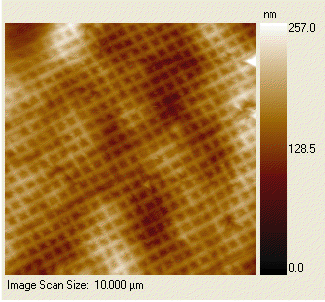
Scanning Probe Microscopy (SPM) on grid pattern

SPM image of a grid pattern

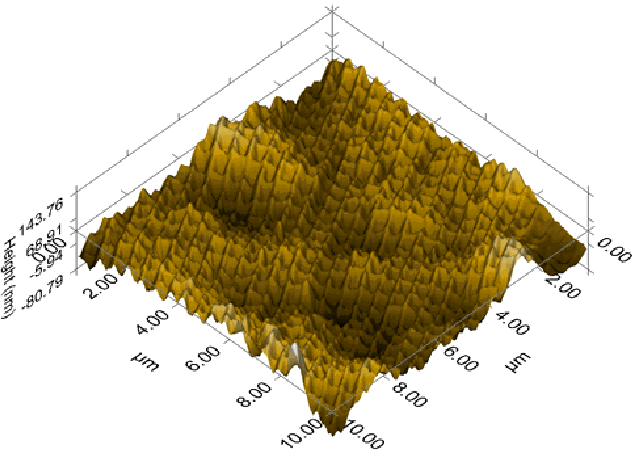
3D Surface Map for Surface Roughness on micron scale

3D render of a grid pattern converted from SPM image

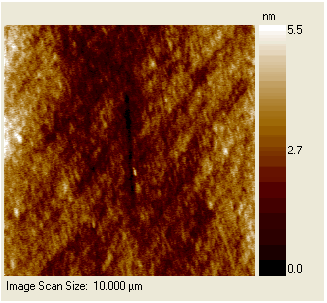
Scanning probe microscopy SPM with 10 um scan size
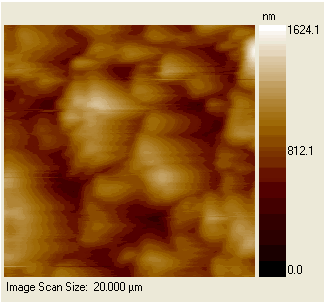
Scanning probe microscopy SPM with 20 um scan size

A SPM image of a scratch on a hard drive platter and a SPM image of a rubber surface

Rubber Surface Roughness Parameters Calculated with TriboView Analysis Software

Scan Area
400 µm^2
RMS (Rq)
170.703 nm
Average Roughness (Ra)
137.135 nm
Max Height
730.156 nm
Min Height
-492.650 nm
Peak-Valley
1222.810 nm
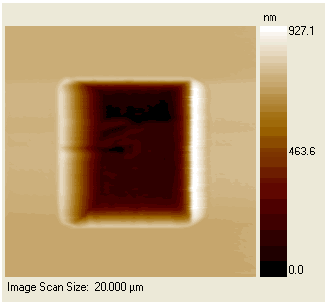
Scanning probe microscopy SPM on wide wear crater

SPM image of a 10 µm wide wear crater

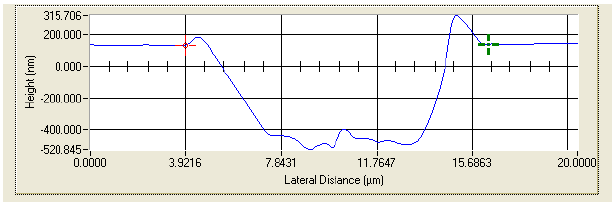
Surface Roughness Line Profile on wide wear crater

Line profile across the 10 µm wear crater generated in TriboView analysis software


Applications

10 Peak Height
Average Surface Roughness
Crack Length
Critical Dimensions
Density of Summits
Grip Material
Line Profile
Material Coating
Material Finishing
Material Removal
Morphology
Nano Features
Peak to Peak
Peak to Valley
RMS Roughness

Instrument: Hysitron TriboIndenter SPM

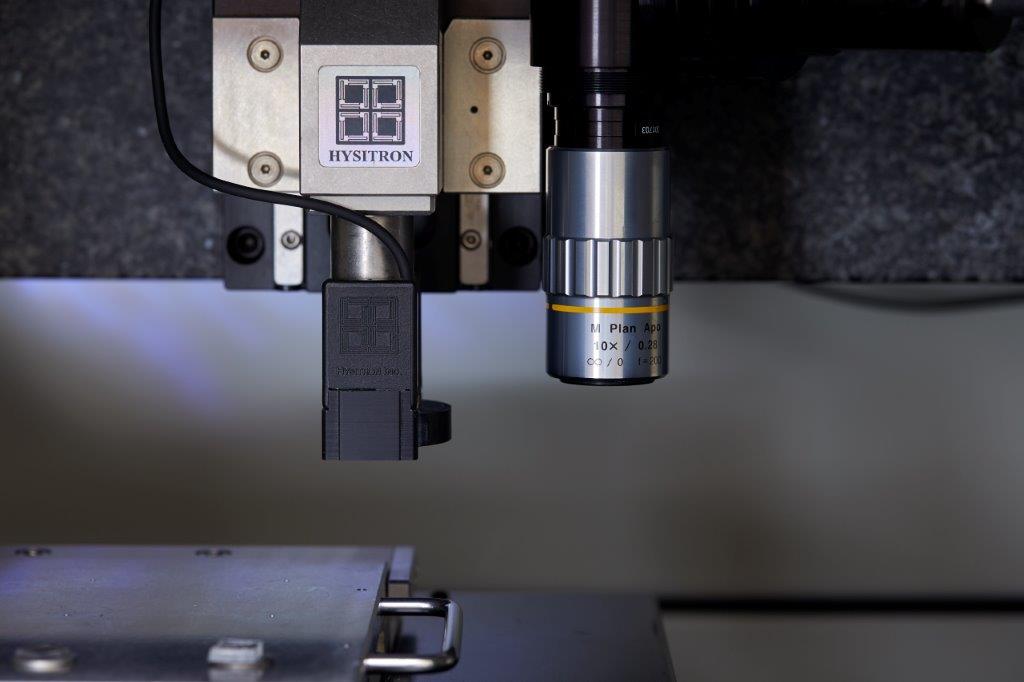
Hysitron TriboIndenter objective lens, indenter tip, piezo, and stage
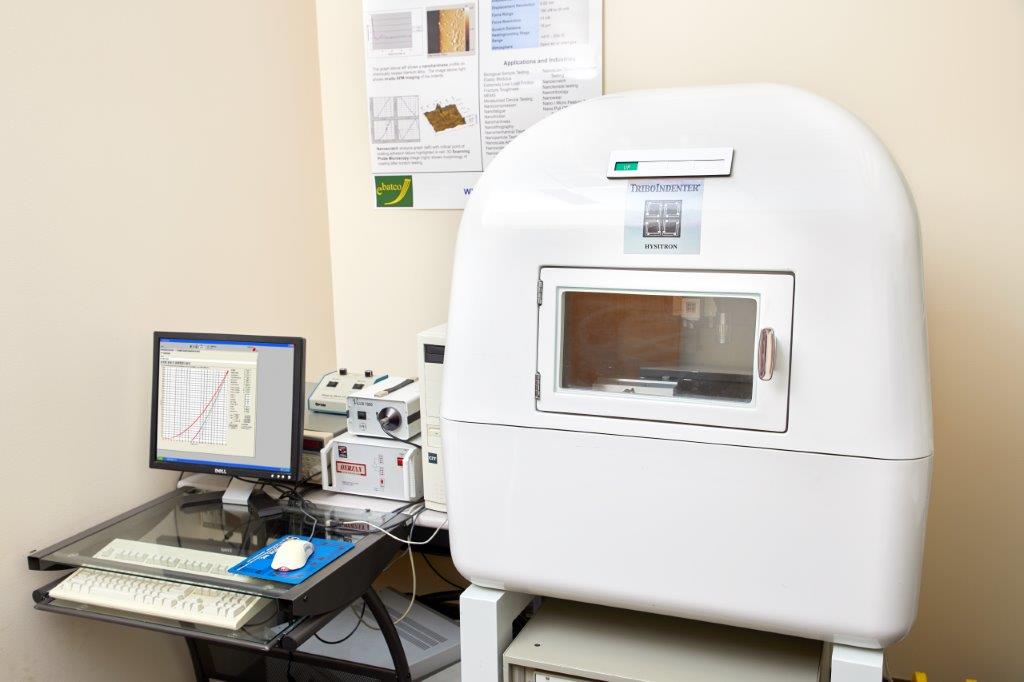
Hysitron TriboIndenter used for SPM in laboratory

Instrument Key Specifications

Max Scan Area60 µm
Max Scan Rate3 Hz
Scan Lines per Image256
Probe Tip GeometryBerkovich, Cube Corner, Conical
Probe MaterialDiamond


ASTM Standards

ASTMTitleWebsite Link
E2859Standard Guide for Size Measurement of Nanoparticles using Atomic Force MicroscopyLink
E1813Standard Practice for Measuring and Reporting Probe Tip Shape in Scanning Probe MicroscopyLink

ISO Standards

ISOTitleWebsite Link
25178-601Geometrical product specifications (GPS) — Surface texture: Areal — Part 601: Design and characteristics of contact (stylus) instrumentsLink
8503-4Preparation of steel substrates before application of paints and related products– Surface roughness characteristics of blast-cleaned steel substrates– Part 4: Method for the calibration of ISO surface profile comparators and for the determination of surface profile– Stylus instrument procedureLink
25319Sintered metal materials, excluding hardmetals– Measurement of surface roughnessLink