Welding is a process by which metal parts can be joined together. It is generally a high temperature process that fuses or connects metal parts at the atomic level. Due to its high temperature operation, the microstructure these metal parts may change during the welding process itself. Mechanical or microscopic characterization of the weld can be performed to evaluate whether the weld has been formed properly or not. Ebatco’s NAT Lab is capable of adapting nondestructive analysis techniques such as optical microscopy and scanning electron microscopy to analyze the microstructure and phase distribution of elements at the welding site, especially around the heat-affected zone (HAZ). We can also perform indentation and scratch testing to quantitatively measure differences in mechanical properties across the weld area.


Typical Experimental Results

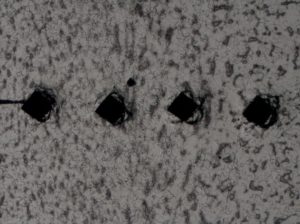
Optical microscopy of etched steel weld

Optical microscopy image of an etched steel weld after micro indentation analysis.

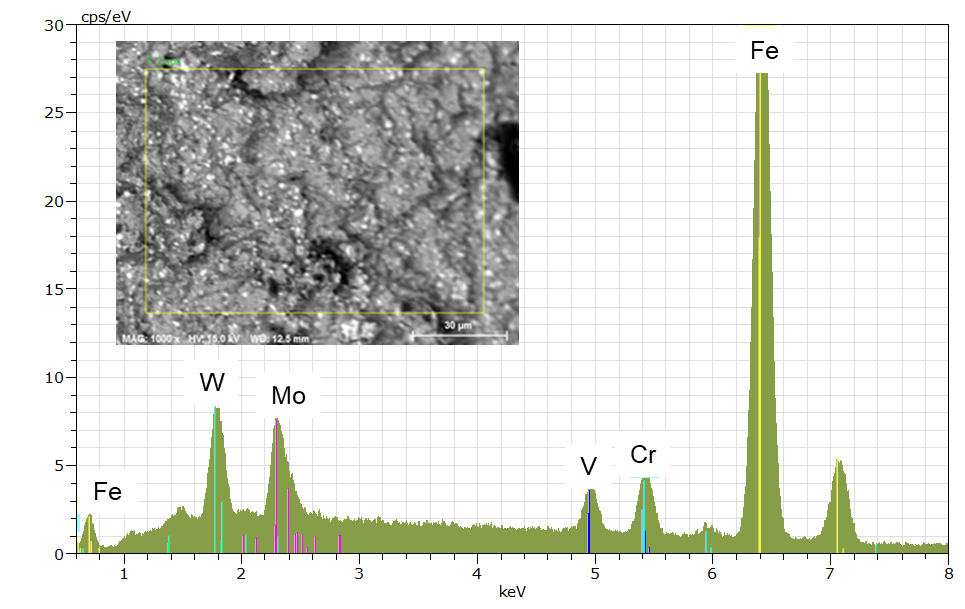
SEM and EDS analysis of fractured metal surface

SEM/EDS analysis of a fractured metal pin. The inset image being the fracture surface of the weld between the pin’s cap and shaft.


Applications

AlloysChemical EtchingCorrosion AnalysisCross-Section AnalysisCrystal Structures
Element DistributionFailure AnalysisForeign Material IdentificationForensic AnalysisFractography
Fracture StudyGrainsGrain BoundariesGrain GrowthGrain Orientation
Grain SizeGrain StructureIC Failure AnalysisMaterialsMetals
MetallographyMetallurgyMicroscopyMicrostructurePhase Diagram
SpectroscopySteels   

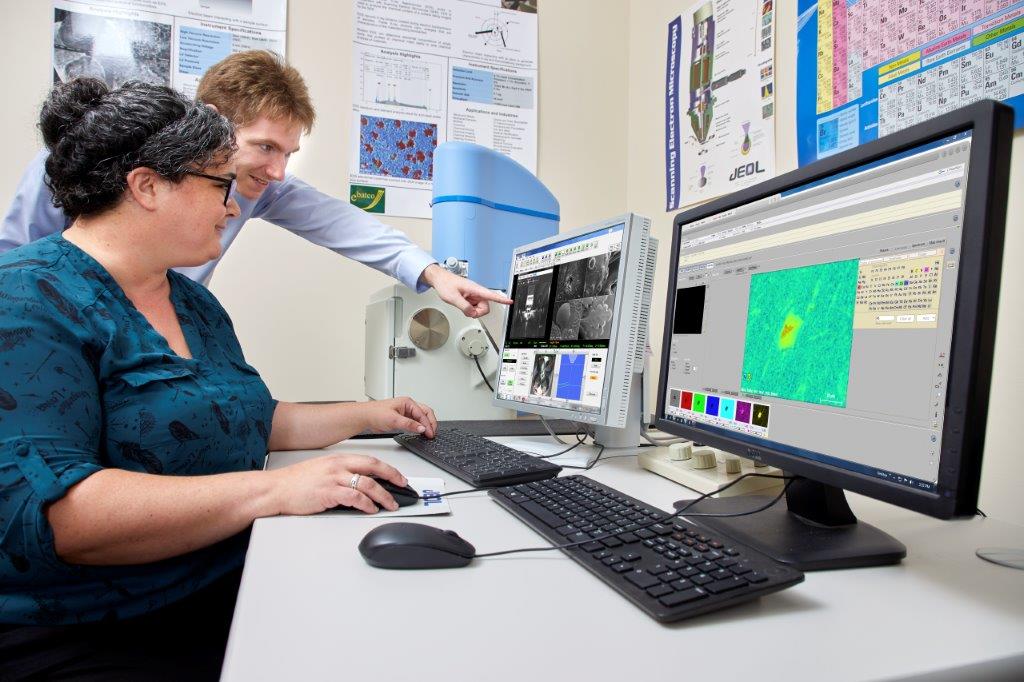
Instrument: JEOL 6610 LV Scanning Electron Microscope

JEOL 6610 LV Scanning Electron Microscope in laboratory
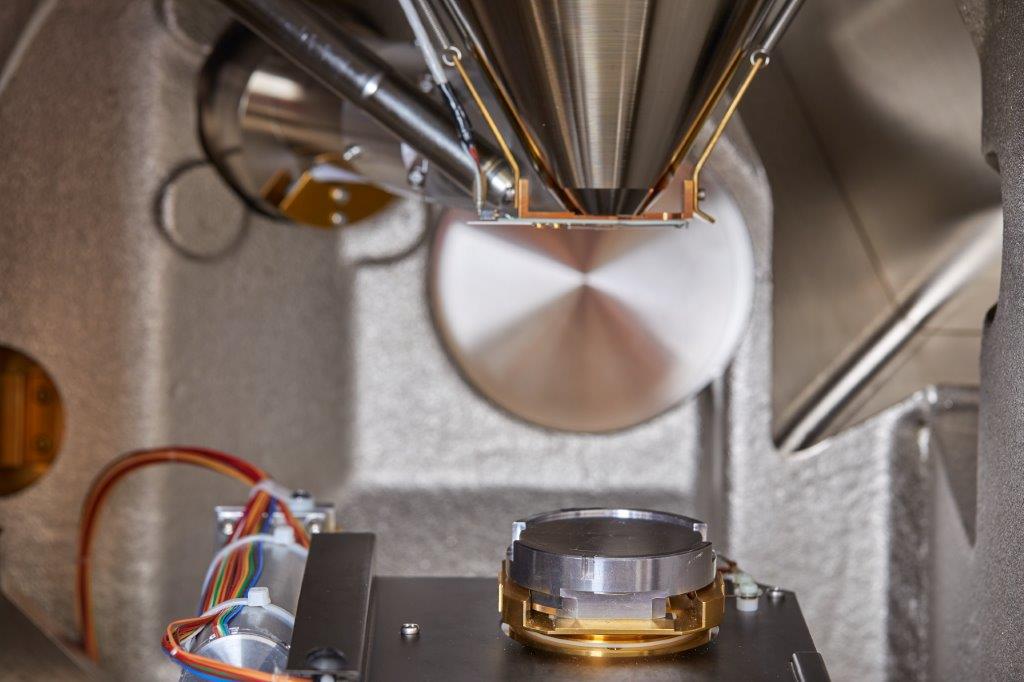
SEM sample chamber with stage, beam, and detector

Instrument Key Specifications

FilamentW hairpin filament
ResolutionHigh Vacuum: 3nm (30kV),
8nm (3kV), 15nm (1kV)
Low Vacuum: 4 nm (30kV)
Accelerating Voltage300 V to 30 kV
Magnification5x to 300,000x
LV DetectorMulti-segment BSED
LV Pressure10 to 270 Pa
Sample SizesHeight: 80mm; Width: 178 mm
StageEucentric 5 axis motor control, asynchronous movement, x-y: 125mm-110mm, z: 5mm-8mm, tilt:-10 to 90 degrees, rotation: 360 degrees
Resolution5120 x 3840 pixels
Condenser LensZoom condenser lens
Objective LensConical objective lens


ASTM Standards

ASTMTitleWebsite Link
A262Standard Practices for Detecting Susceptibility to Intergranular Attack in Austenitic Stainless SteelsLink
A763Standard Practices for Detecting Susceptibility to Intergranular Attack in Ferritic Stainless SteelsLink
A802Standard Practice for Steel Castings, Surface Acceptance Standards, Visual ExaminationLink
A892Standard Guide for Defining and Rating the Microstructure of High Carbon Bearing SteelsLink
B657Guide for Metallographic Identification of Microstructure in Cemented CarbidesLink
B748Standard Test Method for Measurement of Thickness of Metallic Coatings by Measurement of Cross Section with a Scanning Electron MicroscopeLink
E1508Standard Guide for Quantitative Analysis by Energy-Dispersive SpectroscopyLink
E3Standard Guide for Preparation of Metallographic SpecimensLink
E340Standard Test Method for Macroetching Metals and AlloysLink
E381Standard Method of Macroetch Testing Steel Bars, Billets, Blooms, and ForgingsLink
E384Standard Test Method for Microindentation Hardness of MaterialsLink
E407Standard Practice for Microetching Metals and AlloysLink
E45Standard Test Methods for Determining the Inclusion Content of SteelLink
E7Standard Terminology Relating to MetallographyLink
E766Standard Practice for Calibrating the Magnification of a Scanning Electron MicroscopeLink
E768Standard Guide for Preparing and Evaluating Specimens for Automatic Inclusion Assessment of SteelLink

ISO Standards

ISOTitleWebsite Link
9015-2Destructive tests on welds in metallic materials — Hardness testing — Part 2: Microhardness testing of welded jointsLink
6520-2Welding and allied processes — Classification of geometric imperfections in metallic materials — Part 2: Welding with pressureLink
6520-1Welding and allied processes — Classification of geometric imperfections in metallic materials — Part 1: Fusion weldingLink
5817Welding — Fusion-welded joints in steel, nickel, titanium and their alloys (beam welding excluded) — Quality levels for imperfectionsLink
17639Destructive tests on welds in metallic materials — Macroscopic and microscopic examination of weldsLink
17635Non-destructive testing of welds — General rules for metallic materialsLink
16060Destructive tests on welds in metallic materials — Etchants for macroscopic and microscopic examinationLink
14271Resistance welding — Vickers hardness testing (low-force and microhardness) of resistance spot, projection, and seam weldsLink