Gas Chromatography – Mass Spectrometry (GC-MS) is a two-part instrumental technique that is able to separate complex mixtures into individual components for chemical identification. GC-MS allows the detection and quantification trace‑level chemicals with exceptional specificity, even when they are present in complicated samples.

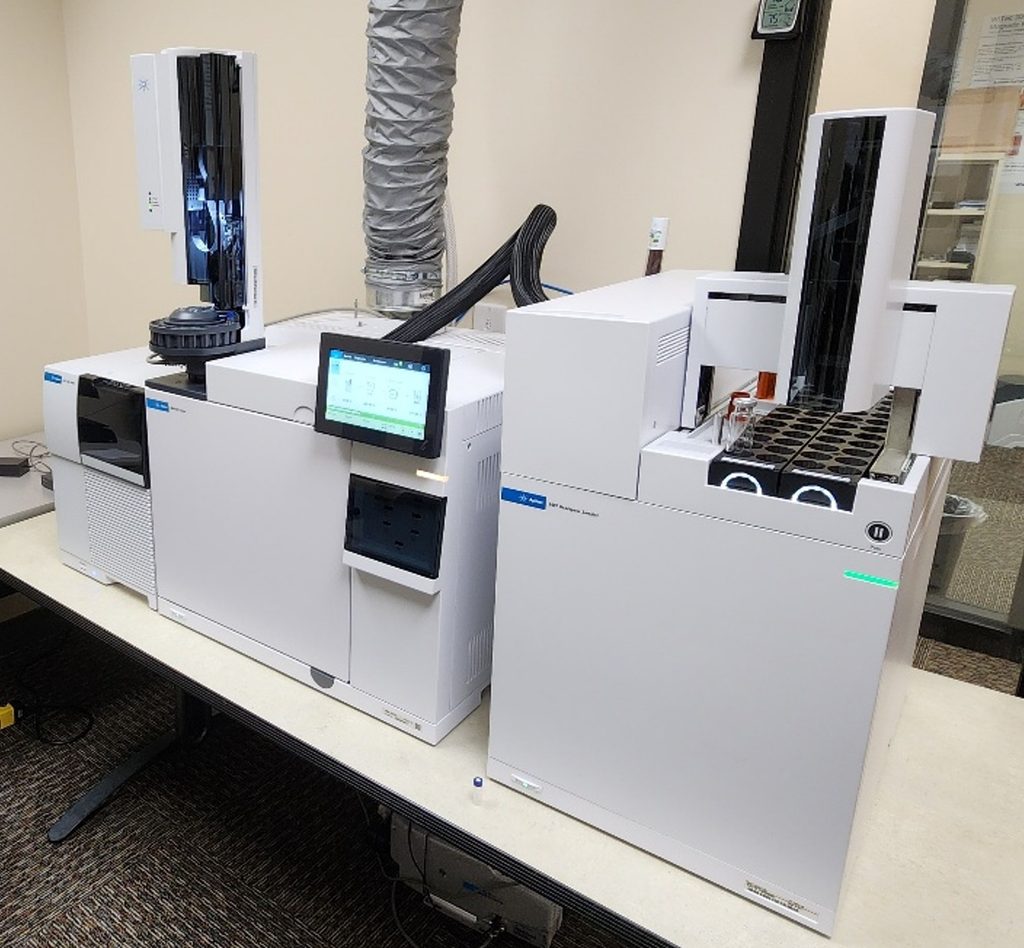
Ebatco’s Agilent 5977C GC/MSD system enables separation and mass‑selective detection of volatile and semi‑volatile compounds. The system can accept samples as liquids through an automatic liquid sampler (ALS) or as vapors through an 8697 Headspace Sampler. This provides flexible sample introduction options for everything from environmental testing to contamination and off-gassing on materials analysis.

As the sample in injected into the chromatography column, each chemical component is separated based on its polarity and size. The more non-polar and larger the molecule, the longer the molecule remains in a non-polar column. Different GC columns could be installed to optimize the separation of compounds across a range of polarity. The GC-MS has excellent temperature control over the oven, ranging from ambient 25 °C to 450 °C with 0.1 °C resolution, allowing slow distinct separation of the components as it enters the mass selective-selective detector (MSD) portion of the instrument.

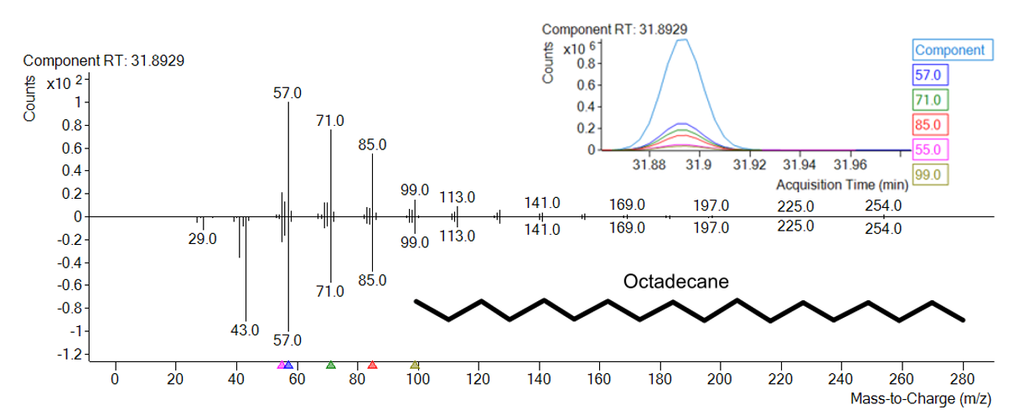
As it enters into the MSD and undergoes electron ionization (EI), the molecule is ionized and breaks apart into charged fragments. Each molecule can be broken down to a unique mass spectrum, or mass spectral-fingerprint, which is then matched to a library to determine its chemical identity.

Typical Experimental Results

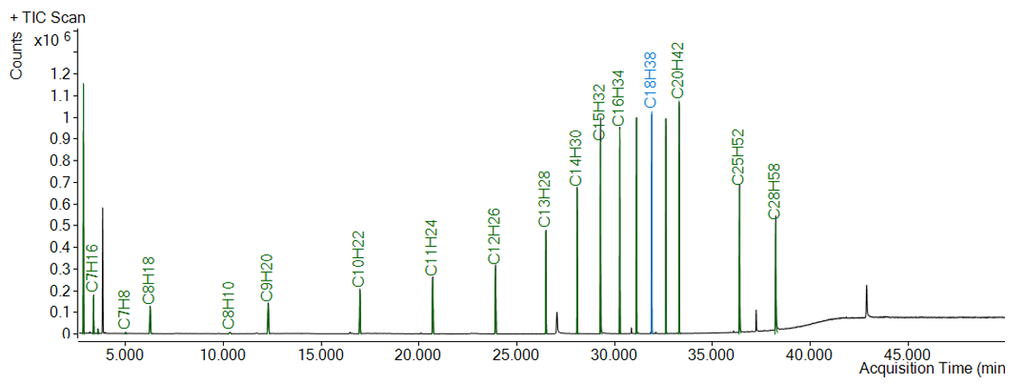
Chromatogram of a hydrocarbon ladder for GS/MS

Chromatogram of a hydrocarbon ladder with octadecane highlighted in blue.

A retention-time verification standard ensures correct peak assignment across different oven programs. The hydrocarbon ladder standard contains mixture of hydrocarbons of different sizes that is separated through the GC, with larger hydrocarbons entering the detector at a longer acquisition time. The hydrocarbon is ionized and fragmented to its mass-spectral fingerprint as it enters the MSD. The obtained mass spectrum is matched within a database and identified. Once an unknown is identified, a calibration curve can be prepared from a certified reference standard, which can then be used for accurate quantification of the contaminant or analyte. A blank can also be used to ignore similar features within the solvent and focus on the features from the sample of interest.

Mass spectral fingerprint of GC/MS

Mass spectral fingerprint of octadecane that was used to identify the compound.


Applications

AccelerantsAerospaceAgricultureAromatics
BiomedicalConsumer ProductsContaminantsEnvironmental
ExtractablesFood & BeverageForensicsHydrocarbons
ImpuritiesLeachablesMetabolitesOdorants
PesticidesPetrochemicalPharmaceuticalPollutants
Residual SolventsTrace AnalysisUnknowns IDVolatile Organic Compounds

Instrument: Agilent 5977C GC/MSD

Agilent 5977C GC/MSD in laboratory

Key Instrument Specifictions


ASTM Standards

ASTMTitleWebsite Link
D4861Standard Practice for Sampling and Selection of Analytical Techniques for Pesticides and Polychlorinated Biphenyls in AirLink
D5769Standard Test Method for Determination of Benzene, Toluene, and Total Aromatics in Finished Gasolines by Gas Chromatography/Mass SpectrometryLink
D6420Standard Test Method for Determination of Gaseous Organic Compounds by Direct Interface Gas Chromatography-Mass SpectrometryLink

ISO Standards

ASTMTitleWebsite Link
16000-6Indoor air Part 6: Determination of organic compounds (VVOC, VOC, SVOC) in indoor and test chamber air by active sampling on sorbent tubes, thermal desorption and gas chromatography using MS or MS FIDLink
10993-18Biological evaluation of medical devices Part 18: Chemical characterization of medical device materials within a risk management processLink
20595Water quality — Determination of selected highly volatile organic compounds in water — Method using gas chromatography and mass spectrometry by static headspace technique (HS-GC-MS)Link